Things to Do in Savannah GA- 30+ Best Attractions & Experiences
What Are the Best Things to Do in Savannah GA?
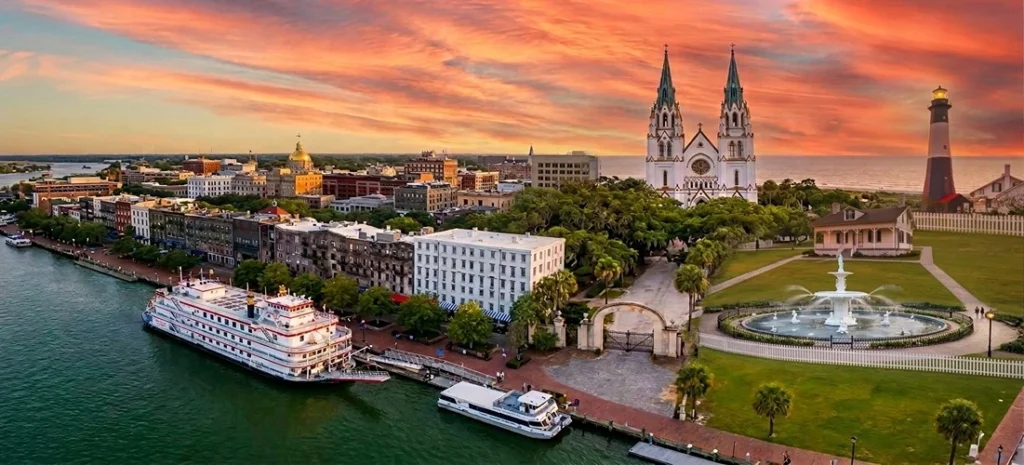
The best things to do in Savannah GA, start in the Historic Landmark District. This is where you’ll find historic squares, grand homes, churches, museums, and River Street. Forsyth Park is another essential stop for first-time visitors. Its fountain, oak trees, and open lawns make it an easy place to explore at your own pace. River Street adds waterfront views, shops, restaurants, and access to Savannah River cruises.
You can also tour historic homes, visit Bonaventure Cemetery, explore City Market, or join a ghost tour after dark. Most visitors can cover the main sights in two or three days. The Historic District is compact and easy to explore on foot. You can then use a trolley, rideshare, or car for attractions farther from the center.
Best Things to Do in Savannah GA
Savannah is easiest to understand when you explore it by area and experience. Start in the Historic Landmark District, where squares, churches, homes, museums, and shops sit close together. The district includes 23 park squares today, according to Visit Savannah.
From there, walk toward Forsyth Park and continue to River Street. You can also visit historic homes, Bonaventure Cemetery, City Market, and Wormsloe Historic Site. A river cruise adds a different view of the city. A ghost tour brings Savannah’s darker stories into the evening.
You do not need to visit every attraction on your first trip. Pick a few major sights and leave time to walk between them. The following Savannah attractions give you a strong starting point.
1. Explore Savannah’s Historic Squares
Savannah’s historic squares are one of the city’s defining features. General James Oglethorpe planned Savannah around a grid of streets and public squares in 1733.
These spaces were designed for public use, trade, gatherings, and community life. Many still sit among historic buildings and mature live oak trees.
Johnson Square makes a good starting point. It was designed in 1733 and became Savannah’s first square. A monument to General Nathanael Greene stands at its center.
Wright Square is another important stop. The square includes a memorial connected to Tomochichi, the Yamacraw leader who welcomed Oglethorpe and the first colonists.
Chippewa Square is famous for another reason. The square appeared in scenes from the movie Forrest Gump. The famous bench is no longer there, but the square remains a popular photo stop.
Madison Square brings together history, architecture, and nearby landmarks. Its center features a monument to Sergeant William Jasper. The square also sits near St. John’s Church and several historic homes.
Monterey Square is another strong choice for architecture lovers. The square includes a monument to Casimir Pulaski. The Mercer Williams House and Congregation Mickve Israel also stand nearby.
Lafayette Square works well if you want to combine several sights. The Cathedral Basilica of St. John the Baptist stands beside the square. The Andrew Low House is also nearby.
You do not need to visit every square during one short trip. Choose several that fit your walking route. Start in the north and move south toward Forsyth Park.
The squares are free to explore. They also make excellent stops for photography. Early morning gives you softer light and fewer people. Late afternoon can work well for warmer architectural photos.
Allow at least two hours for a relaxed walking route. Add more time if you plan to visit museums or historic homes.
2. Walk Through Forsyth Park
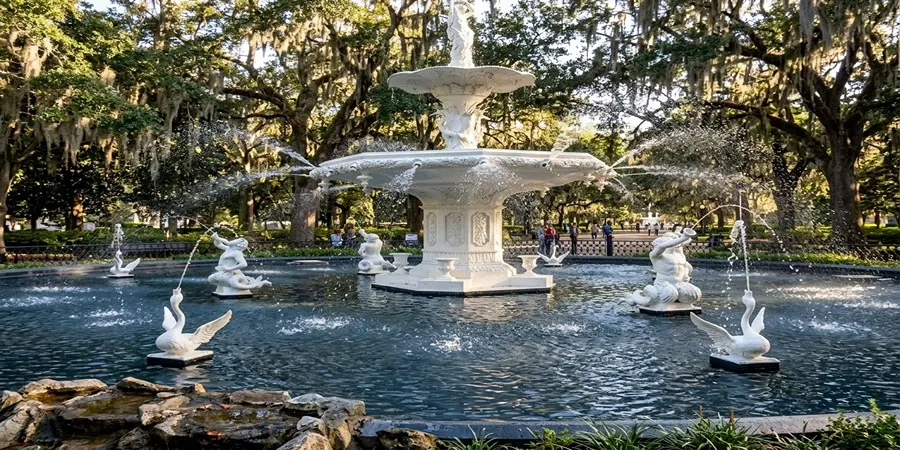
Forsyth Park gives you a break from Savannah’s streets and buildings. The park covers about 30 acres near the southern end of the Historic Landmark District.
The Forsyth Fountain is the park’s best-known landmark. The cast iron fountain dates to 1858 and remains one of Savannah’s most photographed sights.
Large live oaks shade parts of the park. Walking paths cross the lawns and connect different areas. You will also find tennis courts, basketball courts, playgrounds, and a bandshell.
Families can spend time at the playgrounds. Couples can walk beneath the oak trees. Photographers often come for the fountain and surrounding architecture.
Forsyth Park also hosts a Saturday farmers market. Concerts and other community activities take place at different times. Check the current event schedule before planning around them.
The park is free to enter. Give yourself about 45 minutes for a quick visit. Plan closer to two hours if you want a picnic or longer walk.
Forsyth Park connects naturally with the Historic District. You can walk north through the squares after visiting the park. This makes it useful for a self-guided Savannah walking route.
3. Walk Along River Street
River Street deserves more time than a quick photo stop. The waterfront combines Savannah River views, historic buildings, restaurants, shops, and entertainment.
Savannah developed around its riverfront. River Street later became an important commercial waterfront with warehouses and wharves. Factors Walk connected the upper city with the riverfront trading area.
Today, you can walk along the river and watch ships move through the harbor. You can also stop for food, drinks, shopping, or river views.
Factors Walk adds another layer to the experience. Its historic paths and stone structures sit between Bay Street and the riverfront. The area once supported Savannah’s cotton trade.
Plant Riverside District sits at the western end of River Street. The district restored a former 1912 power plant and added hotels, restaurants, shops, and public riverfront space.
What to Do on River Street
Start with a walk along the waterfront. Look across the Savannah River and watch the ships pass.
Continue toward Plant Riverside District if you want dining and entertainment. You can also browse shops along the waterfront.
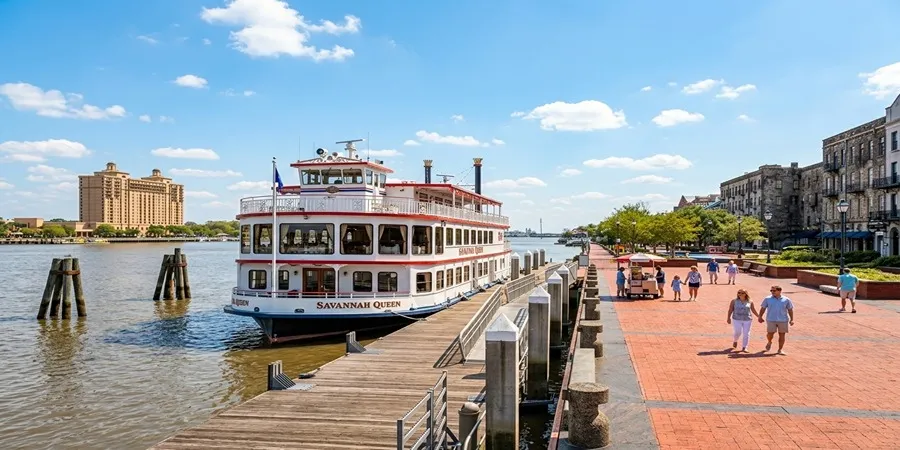
Consider a river cruise if you want to see Savannah from the water. Cruises provide a different view of the waterfront and city skyline.
River Street works well around sunset. The waterfront becomes especially attractive as the light changes.
Wear comfortable shoes because the area includes cobblestones, ramps, and historic stairs. Elevators also provide access between the riverfront and upper streets.
If you have limited time, allow at least one hour. Two to three hours gives you enough time for food and shopping.
4. Visit the Cathedral Basilica of St. John the Baptist.
The Cathedral Basilica of St. John the Baptist is one of Savannah’s most recognizable churches. It stands in the Historic District near Lafayette Square.
The building is known for French Gothic architecture, stained glass, carved details, and tall spires. Visit Savannah identifies it as one of the city’s major architectural landmarks.
The cathedral also remains an active place of worship. Visitors should respect services and other religious activities during their visit.
Take time to look at the stained glass and interior details. The building rewards visitors who enjoy architecture and religious history.
This stop also fits easily into a walking route. Visit Lafayette Square before or after the cathedral. You can then continue toward nearby historic homes.
Allow about 30 to 45 minutes for a casual visit. Check the cathedral’s current visitor information before you go. Tour access and hours can change.
5. Tour Savannah’s Historic Homes
Savannah’s historic homes help explain how the city’s architecture and neighborhoods developed. They also provide more context than an outdoor walk alone.
Several homes operate as museums. Each one tells a different story about Savannah, its residents, architecture, and social history.
Mercer Williams House
The Mercer Williams House stands near Monterey Square. Architect John S. Norris designed the house for General Hugh W. Mercer. Construction began in 1860 and ended after the Civil War.
The house also connects with Savannah’s literary and popular culture. It became widely known through Midnight in the Garden of Good and Evil.
The museum offers guided tours of the interior. Current visitor information lists tours at regular intervals, with schedules changing at times. Check the official site before visiting.
Owens Thomas House and Slave Quarters
The Owens Thomas House gives visitors a closer look at historic architecture and the lives of people connected to the property.
This type of museum matters because Savannah’s history includes both wealth and slavery. A useful visit should address both parts of that history.
Take time to read the museum interpretation instead of focusing only on the home’s design.
Juliette Gordon Low Birthplace
The Juliette Gordon Low Birthplace connects Savannah with the history of the Girl Scouts. Juliette Gordon Low founded the organization in Savannah in 1912.
The house itself dates to the early nineteenth century. It later became a museum dedicated to her life and legacy. The site became a National Historic Landmark.
This attraction works especially well for families and visitors interested in women’s history.
The museum sells tickets and provides current visitor information online. Check the schedule before your visit.
Davenport House Museum
The Davenport House dates to 1820. Builder Isaiah Davenport built the home with the labor of enslaved workers.
Its preservation story is also important. In 1955, the house faced demolition for a parking lot. Seven women helped save it and founded the Historic Savannah Foundation.
Today, the museum interprets the lives of both enslaved and free people connected to the property. That makes it useful for visitors who want more than architecture alone.
Other Historic Homes Worth Considering
You can also look for the Andrew Low House, Green Meldrim House, Sorrel Weed House, and other historic properties.
The best choice depends on your interests. Architecture fans may want a house with strong design details. History-focused visitors may prefer museums with deeper social interpretation.
Do not book several house tours without checking their locations. Many sit close together, but tours can take more time than expected.
6. Visit Bonaventure Cemetery.
Bonaventure Cemetery sits outside the main Historic District. It is worth the short trip for visitors interested in history, architecture, and cemetery art.
The cemetery began as Evergreen Cemetery in 1846. Savannah later purchased it in 1907 and renamed it Bonaventure Cemetery. The grounds now cover nearly 103 acres.
Curving paths, large trees, grassy areas, and historic monuments define the cemetery. Its setting also explains why photographers often include it in Savannah itineraries.
Bonaventure has strong literary connections too. The cemetery appears in the cultural history surrounding Midnight in the Garden of Good and Evil.
You can explore the grounds on your own. Guided options also exist for visitors who want more historical context.
The cemetery is open daily, according to Visit Savannah. Current listed hours run from 8 a.m. to 5 p.m.
Give yourself at least one hour for a short visit. Allow longer if you want to explore deeper sections.
Remember that Bonaventure remains a cemetery. Keep voices low and respect visitors who come to remember family members.
7. Explore City Market
City Market combines shopping, food, art, and entertainment in the heart of Savannah.
The market dates back to the eighteenth century. Visit Savannah describes it as a long-standing center for commerce and community life.
Today, the area includes restaurants, galleries, shops, museums, and live performances. That makes it useful for visitors with different interests.
City Market also works well between other attractions. You can visit after exploring nearby squares. River Street is also within easy reach.
Food lovers can stop for a meal or snack. Shoppers can browse local stores and galleries. Adults can return later for nightlife and live music.
Families may prefer an earlier visit. Couples can combine City Market with dinner and an evening walk.
Allow one to two hours for a relaxed visit. Add more time if you plan to eat or attend live entertainment.
8. Visit Wormsloe Historic Site
Wormsloe Historic Site is one of the most recognizable places near Savannah. Its long oak-lined avenue attracts photographers and history-focused travelers.
The site connects with Noble Jones, an early Georgia settler. Wormsloe later served as a military outpost, plantation, home, and farm.
The famous entrance road runs through a long corridor of live oaks. Spanish moss hangs from many of the branches, creating the setting many visitors associate with coastal Georgia.
The site also includes tabby ruins connected to the original estate. Tabby used materials such as oyster shells, sand, water, and ash.
Wormsloe needs more planning than attractions inside the Historic District. You will need transportation from central Savannah.
The history also requires care. Plantation sites include stories about land, labor, slavery, and colonial expansion. Read the site’s historical interpretation instead of treating the location as only a photo stop.
Plan at least two hours for the visit and travel time. Check current admission, hours, and access information before leaving Savannah.
9. Take a Savannah River Cruise
A Savannah River cruise gives you a different view of the city. Instead of walking through the historic streets, you see the waterfront from the river.
River cruises connect naturally with River Street. You can walk the waterfront before or after your cruise.
The route can show parts of the working harbor, waterfront buildings, bridges, and Savannah skyline. Large ships also move through the river channel.
Day cruises can work well for families and first-time visitors. Evening cruises suit travelers who want a slower experience after sightseeing.
Cruise schedules vary by operator and season. Check the current departure times before planning your day.
Allow extra time around your cruise. River Street has restaurants, shops, and other attractions nearby.
If your trip includes several walking activities, a cruise also gives your feet a break.
10. Take a Savannah Ghost Tour
Savannah’s ghost tours combine local history with stories about hauntings and unexplained events.
The city’s historic homes, cemeteries, churches, and old streets provide the setting. Visit Savannah lists many walking and ghost tour options across the Historic District.
A good tour should separate documented history from local legends. That distinction makes the experience more useful for curious travelers.
Most walking ghost tours focus on the Historic District. Some routes include places such as Colonial Park Cemetery, Chippewa Square, Wright Square, and historic homes.
Ghost tours work especially well after your daytime sightseeing. You can see the same streets from a different perspective.
Adults and couples often choose evening tours. Some operators also provide family-friendly options.
Wear comfortable shoes for walking tours. Bring water during warmer months. Check the tour route and age rules before booking.
If you enjoy Savannah’s darker history, consider making a ghost tour part of your first evening.
A ghost tour should add to your understanding of Savannah. It should not replace the city’s documented history.
More Savannah Attractions Worth Adding to Your Trip
Savannah has more to offer than its famous squares and waterfront. Its museums cover art, local history, military heritage, maritime culture, and American history.
You do not need to visit all of them. Choose the ones that match your interests and available time. The following attractions can add depth to a Savannah trip, especially if you have two or three days. You can discover more in savannah.
Telfair Museums
Telfair Museums is one of the best choices for art and history lovers in Savannah. The institution includes three different sites in the city.
Telfair Academy occupies a historic mansion completed around 1820. Its collection includes American and European art from the 19th and 20th centuries. The building itself is also worth seeing for its architecture.
The Jepson Center offers a very different experience. Its exhibitions focus more on modern and contemporary art. It also includes the Telfair Children’s Art Museum, which gives families another reason to visit.
The third site is the Owens Thomas House and Slave Quarters. It connects Savannah’s architecture with the lives of people who lived and worked there. This makes Telfair useful for visitors who want both art and local history.
The three sites sit within the downtown area. You can visit more than one during the same walking day. Telfair also offers free architectural audio tours for visitors who want to explore at their own pace.
Best for: Art lovers, history fans, families, and architecture enthusiasts.
Time needed: Allow several hours if you want to visit all three sites.
SCAD Museum of Art
The SCAD Museum of Art brings contemporary art into Savannah’s historic setting. It belongs to the Savannah College of Art and Design and serves both students and the public.
The museum presents work from emerging and established international artists. Exhibitions can include painting, sculpture, photography, fashion, digital media, and design.
The museum also hosts lectures, gallery talks, film screenings, and other public programs. Its exhibitions change throughout the year, so the experience can differ between visits.
This is a good stop if you want something different from Savannah’s historic homes. It also gives you a look at the city’s strong creative culture.
The museum sits on Turner Boulevard, west of the main Historic District. Check the current exhibition schedule before visiting.
Best for: Contemporary art fans, design lovers, students, and curious travelers.
Time needed: About one to two hours for most visitors.
Savannah History Museum
The Savannah History Museum is a strong choice if you want a broad introduction to the city’s past.
The museum occupies the former Central of Georgia Railway Passenger Depot. Its exhibits cover Savannah’s history from its early years through more recent periods.
The collection includes archaeological finds, military artifacts, transportation exhibits, and a historic steam locomotive. Current programming also explores Savannah’s role during the American Revolution.
The museum sits beside Battlefield Memorial Park. The park commemorates the 1779 Siege of Savannah, one of the major battles of the American Revolution.
This makes the museum useful before exploring other historic sites. You get more context for the people, conflicts, and events that shaped Savannah.
Families can also combine the visit with the nearby Georgia State Railroad Museum and Savannah Children’s Museum. All three sites sit within Coastal Heritage Society’s Tricentennial Park campus.
Best for: First-time visitors, families, and history lovers.
Time needed: Allow around one to two hours.
Ships of the Sea Maritime Museum
Ships of the Sea Maritime Museum offers a closer look at Savannah’s connection with the Atlantic world.
The museum occupies the historic William Scarbrough House near City Market. Its collection includes ship models, paintings, and maritime objects linked to the 18th and 19th century Atlantic trade.
The museum’s gardens add another reason to stop. They provide a quieter setting after exploring the galleries.
Its location makes it easy to add to a downtown walking day. City Market sits only about one block away. The museum also provides free guest parking.
Plan to spend at least an hour exploring the museum and gardens. It works especially well for visitors interested in Savannah’s port history.
Best for: Maritime history fans, architecture lovers, and travelers who enjoy smaller museums.
Time needed: At least one hour.
American Prohibition Museum
The American Prohibition Museum takes you into a very different period of American history. It focuses on the Prohibition era and the social changes surrounding the 18th Amendment.
The museum uses interactive exhibits, historic artifacts, vehicles, videos, and recreated settings. It also explores the cultural conflict between supporters and opponents of alcohol prohibition.
The museum sits in City Market. That makes it easy to combine with restaurants, shops, and other downtown attractions.
Adults can also visit the museum’s Congress Street Up speakeasy. It offers cocktails inspired by the Prohibition era. The speakeasy operates separately during certain evening hours.
Most visitors spend about 45 minutes to an hour inside the museum.
This attraction suits adults more than families with young children. It also works well on a rainy afternoon.
Best for: Adults, history fans, and travelers interested in American social history.
Time needed: About one hour.
Old Fort Jackson
Old Fort Jackson gives you a chance to explore Savannah’s military history beside the Savannah River.
The fort is an early 19th-century defensive site. Today, Coastal Heritage Society presents military history programs and demonstrations at the fort.
Daily cannon firings are part of the visitor experience when weather allows. Historical interpreters also demonstrate weapons and explain the fort’s role in Savannah’s defense.
The site works well for families because the experience goes beyond static displays. Kids can see demonstrations while adults learn about the fort’s history.
Old Fort Jackson is east of downtown. Plan transportation rather than treating it as a short walk from River Street.
Check the current cannon firing schedule before your visit. Weather can affect outdoor demonstrations.
Best for: Families, military history fans, and visitors who enjoy hands-on experiences.
Time needed: Allow about one to two hours.
Fort Pulaski National Monument
Fort Pulaski National Monument offers one of the strongest historical day trips near Savannah. The fort sits on Cockspur Island between Savannah and Tybee Island.
Construction began in 1829 and took 18 years to complete. The fort later played an important role during the Civil War. The Battle of Fort Pulaski lasted only about 30 hours. Much of the original structure remains today.
The National Park Service also highlights the fort’s importance in military technology. Rifled artillery played a major role in the battle and changed ideas about coastal fortifications.
You can explore the fort’s brick walls, casemates, and surrounding grounds. The site also supports hiking, biking, birdwatching, and fishing.
Fort Pulaski works well with a Tybee Island day. You can visit the fort first and continue toward the beach afterward.
Best for: History lovers, families, photographers, and outdoor travelers.
Time needed: Allow two to three hours.
Savannah Theatre
The Historic Savannah Theatre offers a different way to experience the city after a day of sightseeing.
The theater opened on December 4, 1818. It has survived fires, renovations, and major changes in Savannah’s entertainment scene. The current interior reflects its 1940s Art Deco redesign.
The theater also has a connection with Forrest Gump. During production in 1993, the building served as a wardrobe and makeup headquarters for the film.
Today, the venue presents musicals and other live performances. The schedule changes throughout the year, so check the current calendar before planning your evening.
The theater sits on Bull Street in the Historic District. That makes it convenient for an evening after exploring nearby squares and restaurants.
Best for: Couples, adults, music fans, and visitors looking for evening entertainment.
Time needed: Plan for the full show plus arrival time.
Which Savannah Attractions Should You Choose?
You do not need to visit every museum on your first trip.
Choose Telfair Museums if art, architecture, and history interest you most.
Choose the Savannah History Museum if you want a broad introduction to the city’s past.
Choose Ships of the Sea if Savannah’s maritime history interests you.
Choose the American Prohibition Museum for an interactive adult experience.
Choose Old Fort Jackson for military history and live demonstrations.
Choose Fort Pulaski for a larger historical site with outdoor space.
Choose the Savannah Theatre if you want live entertainment after sightseeing.
If rain changes your plans, museums give you several useful indoor options. If you have three days, consider combining one museum with the Historic District each day.
This approach lets you see more of Savannah without turning your trip into a checklist.
Fun Things to Do in Savannah GA
Savannah is not only about historic buildings and museums. The city also offers plenty of hands-on experiences.
You can tour the city by trolley, explore its food scene, or cruise along the Savannah River. Evening tours add another side of the city. City Market brings shopping, food, art, and live entertainment together. For a change of scenery, head to Tybee Island for beaches and coastal activities.
These experiences work well when you want more than sightseeing. Choose a few based on your interests, time, and travel group.
Take a Trolley Tour
A trolley tour is one of the easiest ways to get familiar with Savannah. It lets you cover several areas without walking between every attraction.
The Explore Savannah Trolley Tour runs for about 90 minutes. Its narrated route passes through the Historic, Victorian, Colonial, and Starland districts. The route includes landmarks such as Forsyth Park, River Street, City Market, and Chippewa Square.
A trolley tour works especially well at the start of your trip. You can see the city’s layout before choosing where to spend more time.
It also helps visitors who have limited mobility or prefer to avoid long walks. Some trolley services also provide shuttle options after the main tour.
Best for: First-time visitors, families, older travelers, and short stays.
When to go: Take it early in your trip.
Time needed: Around 90 minutes for the Explore Savannah route.
Ride a Horse Drawn Carriage
A horse Horse-Drawndrawn carriage offers a slower way to see Savannah’s historic streets. The experience focuses more on atmosphere than covering large distances.
Carriage tours can take you past historic homes, squares, churches, and other landmarks. They also give you a chance to hear stories while someone else handles the route.
This option suits travelers who want a relaxed sightseeing experience. It can also work well for couples looking for a quieter activity.
Choose a tour based on its route and tour length. Ask about weather policies before booking, especially during hot or rainy periods.
You should also consider animal welfare when choosing a carriage operator. Look for a company that follows local rules and provides clear information about its horses.
Best for: Couples, first-time visitors, and travelers who prefer relaxed sightseeing.
When to go: Late afternoon can work well during comfortable weather.
Time needed: Check the current tour schedule before booking.
Take a Food Tour
A food tour lets you combine Savannah’s food culture with its historic streets. You can taste local dishes while learning about the neighborhoods around you.
Savannah offers walking food tours through the Historic District. Some tours combine restaurant stops with stories about local history, architecture, and food traditions.
This makes a food tour useful for first-time visitors. You can discover places to eat while learning where they fit into the city.
Some tours focus on Southern dishes and local specialties. Others include bakeries, specialty shops, or smaller restaurants.
A three-hour walking food tour can include several tasting stops. Savannah Taste Experience, for example, describes its tours as a mix of culinary discovery and cultural exploration.
Wear comfortable shoes because most food tours involve walking. You should also mention allergies or dietary needs before booking.
Best for: Food lovers, couples, adults, and first-time visitors.
When to go: Lunch tours work well for combining food with daytime sightseeing.
Time needed: Around three hours for some walking food tours.
Cruise the Savannah River.
A river cruise gives you a different view of Savannah’s waterfront. You can relax on the water while seeing the city from a new angle.
Savannah Riverboat Cruises offers sightseeing experiences along the waterfront. Its options can include daytime cruises, dinner cruises, brunch cruises, and evening entertainment.
A daytime cruise can fit well into a busy sightseeing schedule. Evening cruises offer a slower setting after exploring downtown.
Families may prefer a daytime sightseeing cruise. Couples may enjoy an evening or dinner option.
River cruises also work well when you need a break from walking. You can spend time on the water without giving up sightseeing.
Check the current cruise schedule before planning your day. Departure times and available experiences can change by season.
Best for: Families, couples, first-time visitors, and travelers who enjoy waterfront views.
When to go: Choose daytime for sightseeing or evening for a more relaxed experience.
Time needed: Check the current cruise length when booking.
Explore Savannah After Dark
Savannah changes once the daytime crowds begin to thin. Historic streets, squares, restaurants, and waterfront areas take on a different feel at night.
A ghost tour is one of the most popular evening activities. You can also enjoy live music, dinner, theatre, or a walk around busy parts of the Historic District.
City Market is another option after sunset. The area includes restaurants, live performances, shops, and outdoor spaces.
River Street also works well for an evening walk. You can combine the waterfront with dinner or drinks.
Keep your evening plans practical. Stick to active areas and use a rideshare or other transport when needed.
Best for: Couples, adults, food lovers, and visitors who enjoy nightlife.
When to go: Start after dinner or around sunset.
Time needed: Two to four hours depending on your plans.
Go Shopping in City Market
City Market is more than a place to buy souvenirs. It combines shopping, food, art, museums, and live entertainment in the Historic District.
The market has served Savannah since the 18th century. Its role has changed over time, but shopping and social activity remain central to the area.
Today, you can browse local art, gifts, clothing, specialty foods, and other items. Restaurants and cafés also make it easy to stop for a meal.
City Market works well between other downtown attractions. You can visit after walking the nearby squares and continue toward River Street.
The area also hosts events during the year. Live music and seasonal celebrations can add more activity to your visit.
Best for: Shoppers, food lovers, families, couples, and first-time visitors.
When to go: Afternoon works well for shopping, and evening works well for dining.
Time needed: One to two hours for a casual visit.
Spend Time at Tybee Island
Tybee Island gives you a coastal break from Savannah’s historic streets. The beach town sits near the mouth of the Savannah River and offers several ways to enjoy the coast.
You can relax on the Savannah beach, walk along Tybee Pier, or visit the Tybee Island Light Station and Museum. The island also offers seafood restaurants and water-based activities.
Active travelers can try kayaking, nature tours, or dolphin excursions. Visit Savannah also highlights sunset cruises and eco kayaking around the island.
Tybee works best as a half-day or full-day addition to a Savannah trip. You can also combine it with Fort Pulaski National Monument.
Families may prefer the beach and pier. Couples can choose a sunset activity or waterfront meal.
Do not treat Tybee Island as another downtown attraction. It is a separate coastal destination, so plan transportation and extra time.
Best for: Families, couples, beach lovers, and outdoor travelers.
When to go: Allow most of a day if you want beach time and another activity.
Time needed: At least half a day, with a full day better for a relaxed visit.
Things to Do in Savannah for Families
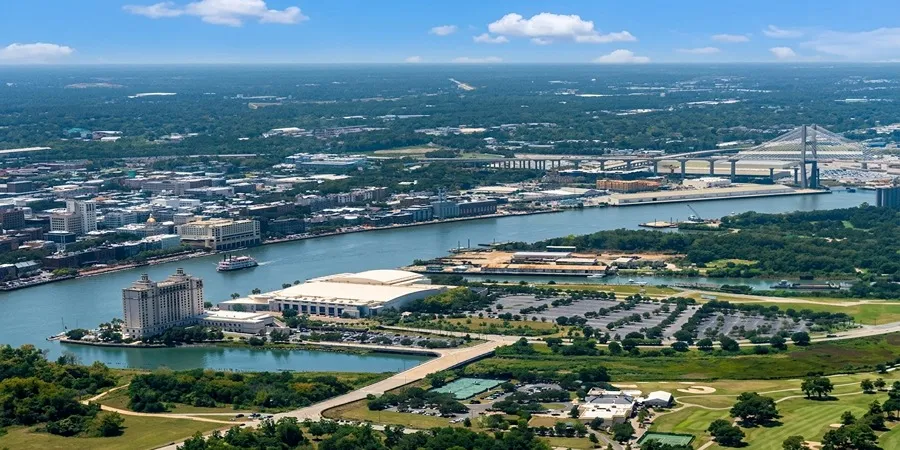
Savannah works well for families because many attractions are close together. You can mix outdoor spaces, museums, boat rides, and beach time.
Forsyth Park gives children room to move and play. The Savannah Children’s Museum offers hands-on exhibits for younger visitors. A river cruise adds sightseeing without another long walking route. Tybee Island gives families a full change of scenery with beaches and coastal activities.
A trolley tour can also help families see more of Savannah with less walking. The best choice depends on your children’s ages, attention spans, and interests.
Best Family Attractions
Forsyth Park
Forsyth Park is an easy family stop in central Savannah. Children can use the playground while parents enjoy the gardens and open lawns.
The park also has walking paths and plenty of space for a relaxed break. The famous Forsyth Fountain gives families an easy photo stop.
There is no admission charge. That makes the park useful when you want to keep daily costs low.
Recommended age: All ages
Time needed: 45 minutes to 2 hours
Cost: Free admission
Savannah Children’s Museum
Savannah Children’s Museum is designed around hands-on learning and play. The museum occupies part of the old Central of Georgia Railway complex.
Children can explore interactive spaces instead of only looking at displays. Outdoor areas also give younger visitors room to explore.
The museum works best for younger children. Check the current opening schedule before visiting because hours can vary.
Recommended age: Best for young children
Time needed: 1 to 2 hours
Cost: Paid admission
Savannah River Cruise
A Savannah River cruise lets families see the waterfront from the water. It can also provide a welcome break after walking through the Historic District.
Daytime sightseeing cruises usually work well for families. Children can watch boats and ships while adults enjoy views of the waterfront.
Cruise options vary by operator and season. Check the current schedule and age policies before booking.
Recommended age: All ages
Time needed: About 1.5 to 2 hours, depending on the cruise
Cost: Paid activity
Tybee Island
Tybee Island is a good choice when children need a break from city sightseeing. The beach offers space for swimming, sand play, and relaxing.
Families can also visit the Tybee Island Light Station and Museum. Other options include dolphin tours, kayaking, and other coastal activities.
Tybee Island sits outside Savannah’s downtown area. Plan extra travel time if you add it to a short itinerary.
A half day can work for a quick beach visit. A full day gives your family more time to enjoy the island without rushing.
Recommended age: All ages
Time needed: Half day to full day
Cost: Beach access can be free, while other activities cost extra
Interactive Museums
Interactive museums can work better for children who lose interest during traditional history tours.
The Savannah Children’s Museum is the strongest choice for younger kids. Older children may enjoy attractions with transportation, military, maritime, or local history themes.
You can also consider the Savannah History Museum or other Coastal Heritage Society sites. Their exhibits give families more ways to learn about Savannah’s past.
Choose one museum rather than trying to visit several in one day. This leaves time for outdoor activities and meals.
Recommended age: Depends on the museum
Time needed: 1 to 2 hours
Cost: Varies by attraction
Trolley Tour
A trolley tour can make sightseeing easier with children. You can see major parts of Savannah without asking kids to walk several miles.
The Explore Savannah Trolley Tour lasts about 90 minutes. Its route includes major areas such as the Historic District, Victorian District, Forsyth Park, River Street, and City Market.
A trolley tour works particularly well near the start of your trip. It helps the whole family understand where major attractions are located.
Check the operator’s current schedule and ticket rules before booking.
Recommended age: All ages
Time needed: About 90 minutes
Cost: Paid activity
Family Activities at a Glance
Activity | Recommended age | Time | Cost |
|---|---|---|---|
Forsyth Park | All ages | 45 minutes to 2 hours | Free admission |
Savannah Children’s Museum | Young children | 1 to 2 hours | Paid admission |
Savannah River Cruise | All ages | About 1.5 to 2 hours | Paid activity |
Tybee Island | All ages | Half day to full day | Beach access may be free |
Interactive museums | Depends on museum | 1 to 2 hours | Varies |
Trolley tour | All ages | About 90 minutes | Paid activity |
How to Plan a Family Day in Savannah
Start with an outdoor attraction when the children have the most energy. Forsyth Park works well for this.
Then choose one indoor attraction during the hottest part of the day. The Savannah Children’s Museum can work well for younger children.
Save River Street or City Market for later in the day. Both areas offer places to stop for food and short breaks.
If you have another full day, consider Tybee Island. It gives children a different setting and gives parents a break from historic sightseeing.
Do not pack too many attractions into one day. Children usually enjoy Savannah more when the schedule leaves room for breaks.
Things to Do in Savannah for Couples
Savannah is a good city for couples who enjoy slow walks, historic streets, good food, and evening experiences. Many romantic spots sit close together in the Historic District.
You can spend the morning exploring quiet squares, take a river cruise later, and finish with dinner downtown. Couples can also choose a sunset walk, rooftop drinks, or a ghost tour after dark.
You do not need an expensive itinerary to enjoy Savannah together. Some of the best date ideas cost little or nothing. The key is choosing experiences that leave enough time to enjoy each other.
Romantic Savannah Experiences
Walk Through the Historic Squares
Savannah’s historic squares create an easy setting for a relaxed date. You can walk beneath live oaks, admire historic homes, and stop for photos along the way.
Monterey Square is a strong choice for couples who enjoy architecture. Madison Square and Lafayette Square also sit near several notable buildings and churches.
Early morning works well if you want quieter streets. Late afternoon gives you softer light for photos.
You can turn the walk into a longer date by stopping at a nearby café or restaurant. No admission is required to explore the public squares.
Best for: Couples who enjoy walking, history, and photography.
Cost: Free.
Stroll Along River Street
River Street offers one of the easiest waterfront date ideas in Savannah. You can walk beside the Savannah River while exploring historic buildings, shops, and restaurants.
The waterfront becomes especially appealing around sunset. Find a quiet spot along the river and watch boats move through the harbor.
Plant Riverside District adds restaurants, shops, and entertainment at the western end of River Street.
You can keep the date simple with a walk and dinner. You can also add a river cruise for a longer evening.
Best for: Sunset dates, casual couples, and waterfront dining.
Cost: Free to walk, with food and entertainment costing extra.
Take a Savannah River Cruise
A river cruise can turn a regular sightseeing day into a slower experience. You can relax together while watching Savannah’s waterfront from the water.
Day cruises suit couples who want sightseeing without committing to a full evening. Dinner and evening cruises offer a more traditional date night setting.
Savannah Riverboat Cruises offers several cruise experiences, including sightseeing and dining options. Availability varies by date and season.
Check the current schedule before booking. Some cruises focus on sightseeing, while others include food or entertainment.
Best for: Couples celebrating an occasion or looking for a relaxed date.
Cost: Paid activity.
Take a Sunset Walk
Savannah gives couples plenty of places for an evening walk. Forsyth Park, the Historic District, and River Street each offer a different setting.
River Street works well if you want water views. Forsyth Park works better for a quieter walk beneath the oak trees.
You can also walk through several historic squares before heading to dinner. This creates a simple date without adding another ticketed attraction.
Check sunset time before leaving. Arriving a little early gives you time to find a good viewing spot.
Best for: Low-cost dates and relaxed evenings.
Cost: Free.
Try Rooftop Dining
A rooftop restaurant or bar can add city views to a Savannah date night. Several downtown properties offer elevated dining or drinks.
This option works best when you want to combine food with an evening view. Make a reservation when possible, especially for weekends and popular dining times.
Weather matters with rooftop seating. Have an indoor option in mind if rain or strong heat affects the evening.
Dress codes can also vary by venue. Check the restaurant’s current policy before going.
Best for: Special occasions, anniversaries, and date nights.
Cost: Varies by restaurant.
Take a Ghost Tour Together
A ghost tour gives couples something different to do after dinner. Savannah’s historic streets provide the setting for stories about local legends, old buildings, and unexplained events.
Walking tours are especially easy to add to a downtown evening. Some tours focus on history and folklore, while others lean more heavily into paranormal stories.
Choose a tour that matches your interests. Check the walking distance and age rules before booking.
A ghost tour can also work well for couples who want an activity rather than another restaurant stop.
Best for: Couples who enjoy history, legends, and nighttime activities.
Cost: Paid activity.
Plan a Savannah Date Night
A good date night does not need several expensive reservations. Build the evening around two or three nearby experiences.
Start with a sunset walk through the Historic District or along River Street. Follow it with dinner at a restaurant that fits your budget. Finish with a ghost tour, live performance, or drinks with a view.
Keeping the stops close together makes the evening easier. It also gives you more time to enjoy the experience instead of traveling between locations.
For a special occasion, book the main restaurant or cruise first. Then build the rest of the evening around that reservation.
Simple date night: Historic squares → River Street → dinner.
Waterfront date: Sunset walk → river cruise → dinner.
Nighttime date: Dinner → ghost tour → drinks.
Low cost date: Historic squares → Forsyth Park → sunset walk.
Best Couples Activities at a Glance
Experience | Best for | Typical time | Cost |
|---|---|---|---|
Historic squares | Walking and photography | 1 to 2 hours | Free |
River Street | Sunset and waterfront views | 1 to 2 hours | Free to walk |
River cruise | Relaxed sightseeing | Varies | Paid |
Sunset walk | Simple date | 30 to 90 minutes | Free |
Rooftop dining | Special occasions | 1.5 to 3 hours | Varies |
Ghost tour | Evening entertainment | About 1.5 to 2 hours | Paid |
Date night restaurants | Food and celebrations | 1.5 to 3 hours | Varies |
The best things to do for couples in Savannah depend on the type of date you want. For a first visit, combine a historic walk with River Street and an evening meal.
For something more memorable, add a river cruise or ghost tour. If you want to keep costs low, focus on the squares, Forsyth Park, and the waterfront.
Things to Do in Savannah for Adults
Savannah offers plenty of things to do for adults beyond daytime sightseeing. You can spend the day exploring museums and historic streets, then enjoy food, drinks, music, or nightlife.
The Historic District makes it easy to combine several experiences. City Market, River Street, and nearby streets have restaurants, bars, shops, and entertainment within walking distance.
Food tours are a good way to explore Savannah’s local flavors. Ghost tours bring history and folklore into the evening. Live performances and historic pubs offer other ways to enjoy the city after dark.
Your best plan depends on what you enjoy. Some adults may prefer museums and shopping. Others may want cocktails, live music, and a late night downtown.
Explore Savannah Nightlife
Savannah has an active nightlife scene centered around areas such as City Market, River Street, and the Historic District.
You can start with dinner and continue to a cocktail bar or live music venue. Some areas stay active into the evening, making it easy to visit several places without driving between them.
City Market is a popular choice for evening entertainment. The area includes restaurants, bars, shops, and live performances.
River Street offers another option. You can enjoy waterfront views before stopping for food or drinks.
If you plan to drink, use a rideshare or another safe transportation option. Do not drive after drinking.
Best for: Adults who enjoy restaurants, drinks, music, and evening entertainment.
Try Savannah Cocktail Bars
Savannah’s bar scene includes classic cocktails, craft drinks, rooftop settings, and historic spaces.
You can find bars throughout the Historic District and nearby downtown areas. Some focus on creative cocktails, while others offer casual drinks and live entertainment.
A cocktail stop works well between dinner and another evening activity. You can also make it the main focus of your night.
Rooftop bars offer another option when you want city views. Weather can affect outdoor seating, especially during hot or rainy periods.
Check current hours and age policies before visiting. Some venues may have different rules during special events.
Best for: Adults looking for drinks, date nights, and evening views.
Cost: Varies by venue and drinks ordered.
Take a Savannah Food Tour
A food tour combines local dishes with stories about Savannah. It can also help you discover restaurants and food spots for the rest of your trip.
Many walking tours take place in the Historic District. Stops may include restaurants, bakeries, specialty shops, or other local food businesses.
Savannah Taste Experience offers food tours that combine tastings with local history and culture. Current tour options and schedules vary.
Food tours usually involve several hours of walking. Wear comfortable shoes and tell the operator about dietary restrictions before booking.
This experience works well early in your trip. You can use the places you discover to plan later meals.
Best for: Food lovers, first time visitors, and adults who enjoy local culture.
Time needed: Often around three hours, depending on the tour.
Join a Ghost Tour
Savannah’s ghost tours are popular evening experiences for adults. They combine local history, legends, and stories about reportedly haunted places.
Walking tours often travel through the Historic District after dark. Some routes focus on historic events, while others emphasize paranormal stories.
A good tour should make a clear distinction between documented history and local folklore. This helps you understand which stories have historical evidence.
Visit Savannah lists several ghost tour options in the city. Routes, schedules, and age requirements vary by operator.
Ghost tours can work well after dinner. They also give you a reason to explore the historic streets at night.
Best for: Adults, history fans, and travelers who enjoy legends.
Time needed: Usually around 1.5 to 2 hours.
Visit Historic Pubs
Savannah’s historic streets include pubs and bars inside old buildings. These places let you combine a drink with the city’s architecture and history.
Some downtown venues also have connections with Savannah’s long nightlife tradition. You can explore these spots while walking between City Market, River Street, and nearby squares.
The experience varies from quiet neighborhood pubs to busy evening bars. Choose the setting that matches your preferred pace.
If you want to visit several pubs, plan your route before going out. Keep the stops within a walkable area and arrange safe transportation afterward.
Best for: Adults who enjoy history, casual drinks, and local atmosphere.
Cost: Varies by venue.
See Live Entertainment
Savannah has several ways to enjoy live entertainment after sightseeing. Options include theatre, live music, concerts, and other performances.
The Savannah Theatre is one of the city’s historic entertainment venues. The theatre opened in 1818 and continues to host live shows.
City Market also features live performances throughout the year. Check the current event schedule if you want to plan your evening around music or entertainment.
Live entertainment works well when you want a planned evening. Book popular shows ahead of time when possible.
Best for: Adults, music fans, theatre lovers, and couples.
Cost: Varies by performance.
Explore Savannah’s Museums
Museums give adults a quieter alternative to Savannah’s nightlife. They also provide more context about the city’s art, architecture, and history.
Telfair Museums offers art and historic house experiences across three Savannah locations. The Jepson Center focuses on modern and contemporary art.
The SCAD Museum of Art focuses on contemporary art and design. Its exhibitions change throughout the year.
The American Prohibition Museum explores the history and culture surrounding Prohibition in the United States. It sits in the City Market area.
These museums work especially well during hot or rainy weather. They can also balance a busy itinerary filled with outdoor activities.
Best for: History lovers, art fans, and adults seeking indoor activities.
Time needed: About one to two hours per museum.
Go Shopping Downtown
Shopping gives adults an easy way to fill an afternoon between major attractions.
City Market has shops, galleries, restaurants, and local businesses. River Street offers more stores along the waterfront.
You can look for local artwork, gifts, clothing, food products, and Savannah themed souvenirs.
Broughton Street provides another downtown shopping area. Its location makes it easy to combine shopping with restaurants and nearby attractions.
Give yourself extra time if you want to browse galleries or independent stores. Opening hours can differ between businesses.
Best for: Shoppers, art lovers, and visitors looking for local gifts.
Cost: Free to browse, with purchases costing extra.
Best Adult Activities at a Glance
Activity | Best for | Typical time | Cost |
|---|---|---|---|
Savannah nightlife | Bars and evening entertainment | 2 to 5 hours | Varies |
Cocktail bars | Drinks and socializing | 1 to 2 hours | Varies |
Food tour | Local food and culture | About 3 hours | Paid |
Ghost tour | History and legends | 1.5 to 2 hours | Paid |
Historic pubs | Drinks and atmosphere | 1 to 3 hours | Varies |
Live entertainment | Theatre and music | 2 to 3 hours | Varies |
Museums | Art and history | 1 to 2 hours | Varies |
Downtown shopping | Gifts and local products | 1 to 3 hours | Free to browse |
How to Plan an Adult Evening in Savannah
You can build an adult evening around one main experience.
Start with dinner in the Historic District or City Market. Follow it with cocktails, a ghost tour, or live entertainment.
For a quieter night, visit a museum during the afternoon. Then have dinner near River Street and take a waterfront walk.
For nightlife, stay within one downtown area. This reduces travel time and makes transportation easier.
Savannah works best when you leave room between activities. That gives you time to stop for food, browse a shop, or enjoy a drink without rushing.

Things to Do in Savannah at Night
Savannah becomes more lively after sunset. The Historic District stays active with restaurants, bars, music venues, and evening tours.
River Street offers waterfront views and an easy evening walk. Ghost tours bring local stories into the nighttime streets. Live music gives you another way to spend the evening.
You can also explore Savannah nightlife around City Market and the Historic District. Late night food makes it easier to stay out after dinner.
The best evening plan depends on your interests. You can keep things relaxed with a waterfront walk or build a longer night around food, drinks, and entertainment.
Evening Walk on River Street
River Street is one of the easiest places to start a Savannah night. The waterfront gives you open views of the Savannah River and passing ships.
Historic buildings line the street, with restaurants, shops, and bars occupying many of the former warehouses.
Start your walk around sunset if you want changing light over the river. Continue along the waterfront and stop whenever you find a restaurant or bar that interests you.
Plant Riverside District adds another lively area at the western end of River Street. It includes restaurants, shops, entertainment, and public spaces.
River Street works for a short evening walk or a longer night out.
Best for: First time visitors, couples, families, and casual evening plans.
Time needed: 30 minutes to 2 hours.
Cost: Free to walk. Food, drinks, and shopping cost extra.
Take a Savannah Ghost Tour
A ghost tour is one of the most popular things to do in Savannah at night. The tours combine local history with legends about haunted buildings and historic streets.
Most walking tours take place in the Historic District. You can hear stories while seeing historic locations after dark.
Some tours focus more on historical events. Others give greater attention to paranormal stories and local legends.
Visit Savannah lists several ghost tours across the city. Tour length, meeting points, age requirements, and themes vary.
Read the tour description before booking. Choose a historical tour if you want more documented local history.
Best for: Adults, older children, history lovers, and visitors who enjoy spooky stories.
Time needed: Usually 1.5 to 2 hours.
Cost: Paid activity.
Enjoy Live Music and Entertainment
Live entertainment gives you plenty of choices after dinner. Savannah has music venues, theaters, bars, and seasonal events.
City Market is one of the better known areas for evening entertainment. Live performances can take place around the market throughout the year.
The Savannah Theatre provides another option for a planned evening. The historic venue presents live shows and musicals during its performance seasons.
You can also look for live music at local bars and restaurants. Schedules change often, so check the venue’s current calendar before going.
For a relaxed night, choose a smaller music venue. For a structured evening, book a theater performance.
Best for: Music fans, couples, adults, and visitors who prefer planned entertainment.
Time needed: About 2 to 3 hours.
Cost: Varies by venue.
Experience Savannah Nightlife
Nightlife in Savannah ranges from quiet cocktail bars to busy downtown venues. The Historic District and City Market offer several options within a walkable area.
You can begin with dinner and move to a bar afterward. River Street also offers restaurants and bars with waterfront views.
City Market becomes especially active in the evening. Its mix of restaurants, bars, shops, and entertainment makes it easy to build a full night nearby.
If you want cocktails, look for bars with a setting that matches your plans. Rooftop spaces work well for views, while smaller bars offer a quieter atmosphere.
Plan your transportation before drinking. Use a rideshare, taxi, or another safe option instead of driving.
Best for: Adults, groups of friends, couples, and visitors seeking nightlife.
Time needed: 2 to 5 hours.
Cost: Varies.
Find Late Night Food
Late-night food can be an important part of a Savannah evening. It gives you somewhere to eat after a ghost tour, show, or night out.
Downtown Savannah has restaurants, bars, cafés, and other food options. However, late-night hours vary widely between businesses.
Do not assume a restaurant stays open because the surrounding area remains busy. Check current hours before heading there.
City Market and the Historic District are useful areas to search for food near other nighttime activities. River Street also has restaurants along the waterfront.
If you are planning a late dinner, check the kitchen closing time. A restaurant may remain open after the kitchen stops taking orders.
Best for: Night owls, visitors finishing evening tours, and people looking for a late meal.
Time needed: 30 minutes to 1.5 hours.
Cost: Varies by restaurant.
Best Things to Do in Savannah at Night at a Glance
Nighttime activity | Best for | Typical time | Cost |
|---|---|---|---|
River Street walk | Waterfront views | 30 minutes to 2 hours | Free |
Ghost tour | History and legends | 1.5 to 2 hours | Paid |
Live music | Music and entertainment | 2 to 3 hours | Varies |
Savannah nightlife | Bars and socializing | 2 to 5 hours | Varies |
Late night food | Post tour meals | 30 minutes to 1.5 hours | Varies |
How to Plan a Night in Savannah
For a relaxed evening, start with a sunset walk along River Street. Have dinner nearby and enjoy the waterfront before heading back to your hotel.
For something more active, have dinner before joining a ghost tour. You can finish with a drink or late night food downtown.
For live entertainment, book your show first. Then choose a restaurant close to the venue.
If nightlife is your priority, stay around City Market or the Historic District. This keeps several evening options within a short distance.
Check business hours before leaving your hotel. Savannah’s evening scene can vary by day, season, and special events.
Things to Do in Savannah When It Rains
Rain does not have to ruin a Savannah trip. The city has museums, historic homes, galleries, shops, and indoor food experiences.
A rainy day can also be a good time to explore Savannah’s history. You can spend a few hours indoors before heading outside when the weather improves.
The best indoor activities in Savannah depend on your interests. History lovers can tour historic houses and museums. Art lovers can visit galleries and museums. Shoppers can browse stores around City Market and Broughton Street.
Check opening hours before leaving your hotel. Some attractions have different schedules by day or season.
Visit Savannah Museums
Museums are some of the best indoor activities in Savannah Georgia. They give you a comfortable place to spend time when rain makes outdoor sightseeing difficult.
Telfair Museums offers several ways to explore art and Savannah history. The group includes Telfair Academy, the Jepson Center, and the Owens Thomas House and Slave Quarters.
The Jepson Center is a strong choice for visitors interested in modern and contemporary art. Telfair Academy focuses on historic art and its collection.
The Savannah History Museum offers another indoor option. Its exhibits cover Savannah’s history from the colonial period through more recent times.
You can spend several hours visiting museums without worrying about rain. Pick one or two based on your interests rather than trying to see everything.
Best for: History lovers, art fans, adults, and families.
Time needed: About 1 to 3 hours per museum.
Cost: Varies by museum.
Tour Historic House Museums
Historic house museums offer a closer look at Savannah’s architecture and past. They also provide a useful indoor alternative when rain makes walking less enjoyable.
The Owens Thomas House and Slave Quarters explores the lives of the people who lived and worked on the property. The site includes the historic house, urban slave quarters, and preserved spaces.
The Juliette Gordon Low Birthplace tells the story of the woman who founded the Girl Scouts. The house also gives visitors a look at historic Savannah architecture.
The Mercer Williams House is another well known historic property. Its history connects with Savannah’s literary and architectural heritage.
Davenport House Museum offers another option within the Historic District. The restored house helps visitors understand domestic life in early 19th century Savannah.
Check tour schedules before visiting. Historic homes often use timed tours rather than open access throughout the day.
Best for: History lovers, architecture fans, and adults.
Time needed: About 1 hour per house.
Cost: Paid admission at most historic house museums.
Explore Art Galleries
Art galleries offer a quieter indoor activity during rainy weather. Savannah’s art scene includes local artists, contemporary work, photography, and design.
City Market has galleries and creative businesses that are easy to combine with restaurants and shops.
The SCAD Museum of Art is another strong option. The museum presents contemporary art and design exhibitions connected with the Savannah College of Art and Design.
Gallery visits can also fit into a short rainy break. You do not need to spend an entire afternoon inside one place.
Check current gallery hours before walking around downtown. Independent galleries may keep different schedules.
Best for: Art lovers, design fans, and visitors seeking quieter activities.
Time needed: 30 minutes to 2 hours.
Cost: Varies. Some galleries offer free entry.
Try Indoor Food Experiences
Rain can be a good excuse to explore Savannah’s food scene. Instead of rushing between outdoor attractions, spend part of the day tasting local dishes.
A guided food tour can combine several tasting stops with stories about Savannah. Some walking tours include indoor restaurants, bakeries, specialty food shops, and other businesses.
Savannah Taste Experience offers food tours that combine local tastings with Savannah history and culture. Tour routes and schedules vary.
If heavy rain makes walking difficult, choose a restaurant based experience instead. You can also plan a long lunch and use the break to wait out a storm.
Call or check the restaurant before going during severe weather. Hours can change when conditions become difficult.
Best for: Food lovers, couples, and adults.
Time needed: 1 to 3 hours.
Cost: Varies by experience.
Go Shopping
Shopping can fill a rainy afternoon without requiring a long outdoor itinerary. Savannah has several shopping areas where stores sit close to restaurants and other indoor attractions.
City Market combines shops, galleries, restaurants, and entertainment in the Historic District.
Broughton Street provides another downtown shopping option. You can browse clothing stores, specialty shops, gifts, and other businesses.
River Street also has shops inside its historic waterfront buildings. However, you may need to walk between businesses, so bring an umbrella during rainy weather.
For heavy rain, focus on stores and attractions that sit close together. This reduces the amount of time you spend outside.
Best for: Shoppers, families, couples, and visitors looking for souvenirs.
Time needed: 1 to 3 hours.
Cost: Free to browse. Purchases cost extra.
Best Indoor Activities in Savannah at a Glance
Activity | Best for | Typical time | Cost |
|---|---|---|---|
Museums | History and art | 1 to 3 hours | Varies |
Historic house museums | History and architecture | About 1 hour | Usually paid |
Art galleries | Art and design | 30 minutes to 2 hours | Varies |
Indoor food experiences | Food and local culture | 1 to 3 hours | Varies |
Shopping | Gifts and local products | 1 to 3 hours | Free to browse |
How to Plan a Rainy Day in Savannah
Start with an indoor attraction during the heaviest rain. A museum or historic house gives you several hours away from the weather.
Have lunch nearby and check the forecast before your next stop. If the rain slows, you can return outside for a short walk.
For steady rain, group attractions by location. This reduces the number of trips between different parts of the city.
A simple rainy day could look like this:
Morning: Telfair Museum
Lunch: Downtown restaurant
Afternoon: Historic house museum
Late afternoon: City Market shopping
Evening: Dinner and live entertainment
Bring a compact umbrella and comfortable shoes. Savannah’s historic streets can become wet and slippery during heavy rain.
For severe storms, stay indoors and check local weather alerts. Do not plan outdoor walks during lightning or dangerous conditions.
Take a Self Guided Walking Tour of Savannah
One of the best things to do in Savannah GA is a self-guided walking tour through its historic squares. A self-guided walking tour is one of the best ways to explore Savannah on foot. This route connects six major stops from Johnson Square to Forsyth Park.
You will pass historic monuments, churches, famous homes, and beautiful streets along the way. The route also shows how Savannah’s original square system shapes the Historic District.
The full route takes about 1.5 to 2 hours of walking time. Allow 3 to 4 hours if you stop for photos, food, museums, or historic homes.
Start at Johnson Square and follow Bull Street south. Continue through Wright Square, Chippewa Square, Madison Square, and Monterey Square. Finish at Forsyth Park.
The route works best during daylight. Wear comfortable shoes and bring water, especially during warmer months.
1. Johnson Square
What to see: Johnson Square is the starting point for this walking route. It was designed in 1733 and became the first square in Savannah’s original town plan. A monument to Revolutionary War hero Nathanael Greene stands at its center. Christ Church Episcopal also sits beside the square.
Walking time: Spend about 15 to 20 minutes exploring the square.
Nearby: Christ Church Episcopal, City Hall, River Street, and Broughton Street are nearby.
From Johnson Square, walk south along Bull Street toward Wright Square. The route takes roughly 8 to 10 minutes.
2. Wright Square
What to see: Wright Square dates to 1733 and honors Sir James Wright, Georgia’s final colonial governor. A monument honors William Washington Gordon. A large boulder also marks the burial place of Tomochichi.
The square has large trees and historic buildings around its edges. Take a few minutes to look at the surrounding architecture.
Walking time: Allow about 15 minutes.
Nearby: Lutheran Church of the Ascension, historic homes, restaurants, and downtown shops are nearby.
Continue south on Bull Street toward Chippewa Square. The walk takes about 8 minutes.
3. Chippewa Square
What to see: Chippewa Square was designed in 1815 to honor the Battle of Chippewa. A bronze statue of James Edward Oglethorpe stands in the center.
Movie fans may recognize Chippewa Square from Forrest Gump. The famous bus stop scenes were filmed at the northern end of the square. The original bench now sits in a museum.
The square also offers views of First Baptist Church and the historic Savannah Theatre.
Walking time: Allow 15 to 20 minutes.
Nearby: Savannah Theatre, First Baptist Church, Foley House Inn, and cafés.
Walk south on Bull Street toward Madison Square. The next stop takes about 5 minutes.
4. Madison Square
What to see: Madison Square was designed in 1837 and named for President James Madison. A monument to Sergeant William Jasper stands in the center. A marker also identifies the southern line of the British defenses during the Siege of Savannah.
Look around the square for historic buildings and detailed architecture. This area is also useful for a short coffee or food break.
Walking time: Allow about 15 to 20 minutes.
Nearby: St. John’s Episcopal Church, Green Meldrim House, Sorrel Weed House, and SCAD-related buildings are nearby.
Continue south along Bull Street. Cross East Jones Street and keep walking toward Monterey Square.
The walk takes about 4 to 5 minutes.
5. Monterey Square
What to see: Monterey Square was designed in 1847. Its central monument honors Casimir Pulaski, who was mortally wounded during the Siege of Savannah.
The square is known for its historic architecture and connection to Savannah’s literary history. The Mercer House stands beside the square.
This is one of the best stops for photography. Take time to examine the surrounding homes and ironwork.
Walking time: Allow 15 to 20 minutes.
Nearby: Mercer Williams House Museum, Congregation Mickve Israel, and historic homes along Bull Street.
Continue south on Bull Street toward Forsyth Park. You will cross several residential blocks before reaching the park.
The walk takes about 5 to 7 minutes.
6. Forsyth Park
What to see: Forsyth Park is the final stop on this route. The 30 acre park stretches between Gaston Street and Park Avenue. Its northern section features the famous Forsyth Park Fountain.
The fountain dates to 1858 and was inspired by the fountains at Paris’s Place de la Concorde. The park also has walking paths, open lawns, gardens, monuments, and recreational areas.
This is a good place to finish the walk. Sit beneath the live oaks, take photos, or continue exploring the Victorian District.
Walking time: Allow at least 30 minutes.
Nearby: Victorian District, Jones Street, restaurants, cafés, and shops.
Savannah Self Guided Walking Route at a Glance
Stop | Walking from previous stop | Suggested time | Main reason to stop |
|---|---|---|---|
Johnson Square | Start | 15 to 20 min | Colonial history and Nathanael Greene monument |
Wright Square | 8 to 10 min | 15 min | Tomochichi memorial and historic setting |
Chippewa Square | About 8 min | 15 to 20 min | Forrest Gump location and Oglethorpe statue |
Madison Square | About 5 min | 15 to 20 min | William Jasper monument and architecture |
Monterey Square | About 4 to 5 min | 15 to 20 min | Mercer House and historic architecture |
Forsyth Park | About 5 to 7 min | 30+ min | Fountain, gardens, and live oaks |
What to See Along the Way
The route offers more than six squares. Bull Street connects several important parts of Savannah’s Historic Landmark District.
Look for historic churches, restored homes, iron balconies, brick sidewalks, monuments, and mature live oaks. The Historic Landmark District contains 23 public squares along with museums, monuments, historic homes, shops, and restaurants.
East Jones Street is another worthwhile detour near the southern part of the route. The street is known for its historic homes and attractive streetscape.
You can also stop at a museum or historic house along the way. Just remember that entering these attractions adds both time and admission costs.
How Long Does the Savannah Walking Tour Take?
The walking distance between the six main stops is roughly 35 to 45 minutes of actual walking. Your total time will depend on how often you stop.
For a quick walk, allow about 1.5 to 2 hours. This gives you enough time to see each square and take some photos.
For a slower experience, allow 3 to 4 hours. You can add coffee, lunch, shopping, or one historic house museum.
If you want to explore Forsyth Park fully, add another 30 to 60 minutes.
Where to Take a Break
You will find restaurants, cafés, shops, and historic buildings throughout this route. Johnson Square puts you close to downtown dining and shopping.
City Market is also a useful detour near the northern part of the Historic District. It offers restaurants, galleries, shops, and entertainment.
Near Madison and Monterey squares, you can find several cafés and restaurants. Forsyth Park also has nearby dining options when you finish the walk.
Tips for Walking Savannah
Start early if you want cooler temperatures and quieter streets. Late afternoon can work well if you want softer light for photography.
Wear shoes with good support. You will spend several hours on foot if you explore the squares in detail.
Carry water during warm weather. Savannah’s humidity can make a moderate walk feel harder than expected.
Use a map on your phone before starting. The Historic District has a simple grid, but extra stops can quickly change your route.
Do not rush from one square to the next. The streets between the squares contain many of the homes and architectural details that make this walk worthwhile.
Best for: First-time visitors, photographers, history lovers, couples, and travelers who enjoy walking.
Admission: Free for the public squares and Forsyth Park.
Possible extra costs: Parking, food, drinks, transportation, and admission to museums or historic homes.
Best time: Morning or late afternoon.
Total walking time: About 1.5 to 2 hours without long stops.
Relaxed exploration time: About 3 to 4 hours.
Best Places to Visit Around Savannah
Some of the best places to visit around Savannah sit outside the Historic District. These nearby attractions give you beaches, military history, coastal landscapes, and colonial history. Things to do in Savannah GA often include day trips to nearby beaches, forts, and historic sites outside the city.
Tybee Island is the easiest choice for a beach day. Fort Pulaski adds military history and outdoor trails. Wormsloe gives you a close look at colonial Georgia and coastal scenery.
You can visit these places as half-day trips or build a full day around them. Your choice depends on how much time you have and how far you want to travel.
Tybee Island
Tybee Island is the best-known beach destination near Savannah. It sits about 20 minutes from downtown by car, depending on traffic.
The island has more than three miles of beaches. You can swim, relax on the sand, walk along the shore, or watch the sunset.
The Tybee Island Pier and Pavilion gives you another easy stop. You can also visit the Tybee Island Light Station and Museum.
Outdoor travelers can try kayaking, nature tours, or dolphin excursions. The island’s marshes and surrounding waters support several wildlife experiences.
Tybee works well for families, couples, and anyone who wants a break from historic sightseeing.
Best for: Beaches, families, couples, seafood, and outdoor activities.
Time needed: Half day for a quick visit. Full day for a relaxed beach trip.
Getting there: Driving is the simplest option from downtown Savannah.
Fort Pulaski National Monument
Fort Pulaski National Monument sits between Savannah and Tybee Island. Visit Savannah places it about 20 minutes outside historic Savannah.
The fort is known for its Civil War history and impressive brick walls. The site also has trails, marshes, beaches, and picnic areas.
You can walk through the fort and learn about its military history. Outdoor trails add another reason to visit when the weather is comfortable.
Fort Pulaski pairs naturally with Tybee Island. You can visit the fort in the morning and continue to the beach later.
This combination works especially well for travelers with a full day available.
Best for: History lovers, families, photographers, and outdoor travelers.
Time needed: About 2 to 3 hours.
Good combination: Fort Pulaski in the morning, Tybee Island in the afternoon.
Wormsloe State Historic Site
Wormsloe State Historic Site is one of the most recognizable historic places around Savannah. Its live oak avenue leads toward the tabby ruins of Noble Jones’s colonial estate.
Noble Jones arrived in Georgia with James Oglethorpe and the first group of settlers in 1733. Wormsloe later became his colonial estate.
The site includes a museum, interpretive trails, a picnic area, and a Colonial Life Area. Visitors can also see the tabby ruins and explore the natural setting around them.
The site has an important historical story beyond its famous oak avenue. Its history includes Native American, African, and European influences on the Isle of Hope.
Allow extra time if you want to explore the trails instead of stopping only for photographs.
Best for: History lovers, photographers, nature fans, and first-time visitors.
Time needed: About 1.5 to 3 hours.
Location: Isle of Hope area, south of downtown Savannah.
Other Savannah Area Day Trips
If you have more than two or three days in Savannah, several nearby places can add variety to your trip.
Skidaway Island State Park: This park offers trails through maritime forest and salt marsh. An observation tower gives visitors a higher view of the surrounding landscape. It works well for hiking and wildlife watching.
Richmond Hill: This community south of Savannah provides access to coastal landscapes and nearby historic sites. It can work well for travelers who want a quieter setting outside downtown.
Fort McAllister State Park: This historic site south of Savannah combines Civil War history with coastal scenery and outdoor recreation. It works well for travelers who enjoy history and nature.
Skidaway Island and Wormsloe: These two sites can work well together because both offer coastal landscapes and historical context. Check opening hours and travel times before combining them.
Hilton Head Island: If you have a full day available, you can cross into South Carolina for beaches, cycling, and coastal activities. This is a longer trip than Tybee Island, so it needs more planning.
Which Savannah Area Trip Should You Choose?
Nearby destination | Best for | Suggested time | Trip style |
|---|---|---|---|
Tybee Island | Beach and seafood | Half to full day | Coastal |
Fort Pulaski | History and nature | 2 to 3 hours | Historic |
Wormsloe | Colonial history and photography | 1.5 to 3 hours | Historic and scenic |
Skidaway Island State Park | Hiking and wildlife | Half day | Outdoor |
Richmond Hill | Coastal scenery and quieter areas | Half day | Relaxed |
Fort McAllister | Military history and nature | Half day | Historic and outdoor |
Hilton Head Island | Beach and cycling | Full day | Coastal |
Best Day Trip Combination from Savannah
For a first visit, Tybee Island and Fort Pulaski make one of the easiest combinations.
Start at Fort Pulaski in the morning while temperatures are comfortable. Explore the fort and nearby trails before continuing toward Tybee Island.
Spend the afternoon at the beach. Finish with seafood or a sunset walk before returning to Savannah.
For history and photography, choose Wormsloe instead. You can spend the morning exploring the historic site and return downtown for an afternoon in the Historic District.
If you prefer hiking, choose Skidaway Island State Park. Its maritime forest and salt marsh setting provide a different experience from Savannah’s urban parks.
Planning Tips for Things to Do Near Savannah
Check the distance before adding a nearby attraction to your itinerary. A place may look close on a map but still take longer during busy periods.
Start early for beach trips during summer. Parking and beach areas can become busier later in the day.
Check attraction hours before leaving Savannah. Historic sites and museums may use seasonal schedules.
Bring water, sunscreen, and comfortable shoes for outdoor sites. Coastal Georgia can become hot and humid during warmer months.
Do not try to visit every nearby attraction in one day. Pick one main destination and add another only if the travel time makes sense.
For a first trip, Tybee Island, Fort Pulaski, and Wormsloe cover three different experiences. You get beaches, military history, and colonial history without repeating the same type of attraction.
Savannah Visitor Tips Before You Go
A little planning can make your Savannah trip much easier. The Historic District is well suited to walking, but you may still need transportation for attractions outside downtown.
Parking rules, attraction hours, and tour schedules can change. Check official websites before your visit, especially during festivals and major events.
How Many Days Do You Need in Savannah?
One day is enough for a quick introduction to Savannah. Focus on the Historic District, historic squares, Forsyth Park, and River Street. When planning things to Do in Savannah GA, knowing how many days you need helps you make the most of your trip.
Two days give you more time for museums, historic homes, Bonaventure Cemetery, and evening activities.
Three days work well if you also want to visit Tybee Island, Wormsloe, or Fort Pulaski.
For most first-time visitors, two to three days gives you a better pace. You can explore the main sights without rushing between every attraction.
Visit Savannah also provides a dedicated one-day itinerary for travelers with only 24 hours.
Is Savannah Walkable?
Yes, the central Historic District is well suited to walking. Visit Savannah describes the city as pedestrian-friendly and recommends exploring its squares and streets on foot.
Many major attractions sit within the Historic District. You can walk between historic squares, Forsyth Park, historic homes, restaurants, and River Street.
Walking distances can still add up quickly. Comfortable shoes matter, especially if you plan to explore several squares in one day.
You will need transportation for some attractions outside the central district. Tybee Island, Fort Pulaski, and Wormsloe are better suited to a car or organized tour.
Where Should You Park?
Downtown Savannah has both street parking and city-owned parking garages.
The city currently operates several parking garages, including Bryan Street, Eastern Wharf, Liberty Street, Robinson Street, and State Street garages.
Street parking uses paid meters in regulated areas. Current city information lists different rates and enforcement hours depending on the parking zone.
A visitor day pass is another option. The city currently lists the price at $15 for 24 hours or $24 for 48 hours. The pass has restrictions and does not apply to every parking situation.
For a full day of sightseeing, check the current garage rates and parking rules before choosing where to leave your car.
Do not assume a private garage follows city parking rules. Private facilities can set their own rates and conditions.
Do You Need a Car?
You do not need a car for most sightseeing in the central Historic District.
Walking works well for historic squares, Forsyth Park, River Street, City Market, museums, restaurants, and many historic homes.
A car becomes more useful when you want to explore outside downtown. Tybee Island, Wormsloe, Fort Pulaski, and other area attractions require more planning.
Savannah also has public transportation and a free downtown DOT shuttle. The city currently lists shuttle service connecting several downtown parking areas with central destinations.
If your itinerary stays within the Historic District, consider leaving the car parked. You can avoid moving it between attractions and deal with less parking during the day.
What Should You Book in Advance?
Book popular tours and timed attractions before your trip when possible. This matters most when you have limited time.
Consider booking ahead for:
- River cruises
- Ghost tours
- Food tours
- Trolley tours
- Popular historic house tours
- Theatre performances
- Special events
- Restaurants you especially want to visit
Visit Savannah lists walking, trolley, carriage, boat, food, history, and ghost tours among the city’s organized tour options.
You do not need to reserve every part of your itinerary. Leave some open time for walking, shopping, cafés, and unexpected stops.
Always check the operator’s current schedule before booking. Tour times and availability can change by season.
What Should You Wear for Walking?
Wear comfortable shoes with good support. A day exploring Savannah can involve several hours on foot.
Choose lightweight clothing during warm months. Bring sunglasses, sunscreen, and a refillable water bottle when spending time outdoors.
An umbrella can also help during periods of rain. Savannah’s summer weather can include afternoon thunderstorms.
For historic house tours, museums, restaurants, and evening venues, dress based on the specific place. Check any dress requirements before visiting.
Comfort should come first if you plan to spend most of the day walking.
What Should You Know About Summer Heat and Rain?
Savannah has hot and humid summers. Visit Savannah notes that summer temperatures can reach the 80s and 90s, with afternoon thunderstorms.
Plan your longest outdoor walks for the morning or later afternoon when possible. Use the hottest part of the day for museums, historic house tours, lunch, or other indoor activities.
Carry water when walking between Savannah’s squares. Use sunscreen and take regular breaks when temperatures are high.
Rain can arrive quickly during summer thunderstorms. Keep an indoor backup plan for your day.
Museums and historic house tours can work well when rain interrupts outdoor sightseeing. Visit Savannah also recommends museums and house tours as ways to escape intense summer heat.
Weather can also affect outdoor tours and coastal plans. Check the forecast before heading to Tybee Island or other outdoor attractions.
Quick Savannah Planning Checklist
Before you go | What to check |
|---|---|
Trip length | Choose one, two, or three days based on your priorities |
Transportation | Decide whether your itinerary needs a car |
Parking | Check current city rates and restrictions |
Tours | Reserve popular experiences ahead |
Walking | Pack comfortable shoes |
Summer weather | Prepare for heat, humidity, and thunderstorms |
Rain | Keep indoor attractions as backup options. |
Outdoor trips | Check conditions before leaving downtown |
One Important Planning Rule
Do not build your Savannah trip around outdated operating information.
Check the official attraction website before visiting. Confirm current hours, admission prices, tour times, parking rules, and special event restrictions.
This matters even more during major events. Savannah’s parking rules and transportation arrangements can change for special occasions. The city publishes event-specific parking information when restrictions apply.
For a smoother trip, plan your main attractions in advance and leave flexible time between them. Savannah is a city where walking, food, architecture, and unexpected discoveries can become part of the experience.
Things to Do in Savannah Based on How Much Time You Have
How long you stay in Savannah changes how much you can see without rushing. One day works for the historic core, while two days allow more time for museums and Bonaventure Cemetery.
Three days gives you enough time to explore beyond downtown. You can add Tybee Island, Wormsloe, or another nearby attraction based on your interests.
The best Savannah itinerary keeps attractions in the same area together. This saves travel time and leaves more room for walking, meals, and unexpected stops.
One Day in Savannah
One day in Savannah is enough to see the city’s main historic areas. Focus on the Historic District and follow a route that moves south toward Forsyth Park.
Morning: Historic District and Historic Squares
Start at Johnson Square and follow Bull Street through the historic squares. Continue through Wright Square, Chippewa Square, Madison Square, and Monterey Square.
Allow time for photos and short stops along the way. You will see monuments, churches, historic homes, and Savannah’s distinctive architecture.
If you start early, you can also stop for breakfast or coffee near the Historic District.
Afternoon: Forsyth Park and a Historic House
Continue south to Forsyth Park after exploring Monterey Square. Walk toward the Forsyth Fountain and spend some time beneath the live oaks.
After the park, choose one historic house museum. The Mercer Williams House, Owens Thomas House, or Juliette Gordon Low Birthplace can add historical context to your walk.
Do not try to visit several house museums during a one-day trip. One detailed visit leaves more time for the rest of Savannah.
Evening: River Street and Dinner
Head toward River Street in the late afternoon. Walk along the Savannah River and explore the historic waterfront.
Stop for dinner near River Street or City Market. If you still have energy, finish your night with a ghost tour.
This route gives you history, architecture, green space, waterfront views, food, and evening entertainment in one day.
Best for: First-time visitors with limited time.
Main route: Historic District → Historic Squares → Forsyth Park → Historic House → River Street → Dinner or Ghost Tour.
Two Days in Savannah
Two days gives you more room to slow down. You can explore the historic core on the first day and focus on museums, Bonaventure Cemetery, and the waterfront on the second. A two-day itinerary is one of the most popular ways to cover the best Things to Do in Savannah GA.
Day 1: Historic Core
Start with Johnson Square and follow the self-guided walking route through Savannah’s historic squares.
Continue toward Forsyth Park and explore the fountain, gardens, and walking paths.
Choose one historic house museum in the afternoon. Juliette Gordon Low Birthplace works well for visitors interested in Savannah history. The Owens Thomas House offers a deeper look at the lives of people connected with the property.
Spend the evening around River Street. Have dinner near the waterfront or continue toward City Market for nightlife.
Add a ghost tour if you want a nighttime activity.
Day 2: Bonaventure Cemetery, Museums, and River Street
Start your second day at Bonaventure Cemetery. Give yourself enough time to explore the grounds and see its historic monuments, live oaks, and notable graves.
Return toward downtown for lunch.
Spend the afternoon at a museum. Telfair Museums, the SCAD Museum of Art, and the Savannah History Museum offer different experiences.
Finish the day with more time on River Street if you only had a short visit there on day one. You can also take a Savannah River cruise if the schedule fits.
Best for: Travelers who want history, museums, architecture, and a slower pace.
Main route: Historic District → Forsyth Park → Historic House → Bonaventure Cemetery → Museum → River Street.
Three Days in Savannah
Three days gives you enough time to explore Savannah beyond the main downtown attractions.
Use the first day for the historic core. Spend the second day exploring deeper into Savannah. Use the third day for Tybee Island or Wormsloe.
Day 1: Historic District
Follow the historic squares route from Johnson Square to Forsyth Park.
Visit one historic house along the way. Spend the evening around River Street and City Market.
Finish with dinner, live entertainment, or a ghost tour.
Day 2: Deeper Savannah
Start at Bonaventure Cemetery and explore its historic grounds.
Spend the afternoon at one or two museums. Telfair Museums works well for art and history. The Savannah History Museum offers more local history.
Use the late afternoon for shopping around City Market or Broughton Street.
Finish with dinner and an evening activity.
Day 3: Choose Tybee Island or Wormsloe
Choose Tybee Island if you want beaches and coastal activities. Spend most of the day swimming, relaxing, or exploring the island.
Choose Wormsloe if you prefer history, photography, and nature. Walk beneath the famous oak avenue and explore the colonial site.
Fort Pulaski can also fit into a Tybee Island day. Its location makes it practical to combine with a beach visit.
Return to Savannah for dinner if you want another evening downtown.
Best for: Travelers who want a balanced Savannah experience with time outside downtown.
Option A: Wormsloe → Fort Pulaski → Tybee Island.
Option B: Wormsloe → Historic District → relaxed evening.
Savannah Itinerary at a Glance
Trip length | Morning | Afternoon | Evening |
|---|---|---|---|
One day | Historic District and squares | Forsyth Park and historic house | River Street and dinner or ghost tour |
Two days | Day 1: Historic core | Day 1: Forsyth Park and house museum | Day 1: River Street |
Two days | Day 2: Bonaventure Cemetery | Day 2: Museum | Day 2: River Street or cruise |
Three days | Day 1: Historic District | Day 1: Forsyth Park and historic house | Day 1: River Street and nightlife |
Three days | Day 2: Cemetery | Day 2: Museums and shopping | Day 2: Dinner and entertainment |
Three days | Day 3: Tybee Island or Wormsloe | Day 3: Coastal or historic sites | Day 3: Return to Savannah |
How Many Days Do You Need in Savannah?
One day: Choose this if you mainly want to see the historic district and major landmarks.
Two days: This is a better choice if you want museums, Bonaventure Cemetery, historic homes, and more time along River Street.
Three days: Choose three days if you want to combine downtown Savannah with Tybee Island or Wormsloe.
For most first-time visitors, two to three days provides the best balance. You can see the major attractions without turning every hour into a scheduled activity.
If you enjoy museums, food, or slow travel, consider staying longer. Savannah rewards travelers who leave time for wandering between planned stops.
How to Choose the Best Savannah Attractions for Your Trip
The best Savannah attractions depend on your time, interests, and travel group. You do not need to visit every popular site.
A first visit calls for Savannah’s historic core. Families may prefer parks and interactive attractions. Couples can focus on scenic walks and evening experiences.
Your available time also matters. One day requires careful choices, while three days allow more flexibility.
Use the guide below to choose attractions that fit your trip instead of following a fixed list.
If It’s Your First Visit
Start with the Savannah Historic District. This area gives you the clearest introduction to the city’s history, architecture, and famous squares.
Walk through Johnson Square, Wright Square, Chippewa Square, Madison Square, and Monterey Square. Continue south to Forsyth Park.
Add one historic house if you enjoy history. Then visit River Street for waterfront views and restaurants.
For your first evening, consider a ghost tour or river cruise.
Best picks: Historic squares, Forsyth Park, one historic house, River Street, and a ghost tour.
If You Have Only One Day
Keep your itinerary within the central areas of Savannah. This saves time and lets you see more on foot.
Start with the historic squares in the morning. Walk south toward Forsyth Park and stop for lunch nearby.
Choose one historic house or museum in the afternoon. Then head toward River Street before sunset.
Have dinner near the waterfront or City Market. A ghost tour can finish the evening if you still have energy.
Avoid adding Tybee Island to a one-day downtown itinerary unless the beach is your main priority.
Best route: Historic District → Squares → Forsyth Park → Historic House → River Street → Dinner.
If You Want Free Activities
Savannah has several attractions that do not charge admission. The historic squares are among the easiest places to start.
Walk through the Historic District and admire the architecture along the way. Continue to Forsyth Park for its fountain, gardens, walking paths, and live oaks.
River Street also offers a free waterfront walk. Bonaventure Cemetery provides another option for visitors interested in history and photography.
A self-guided walking tour lets you combine several free stops into one route.
Remember that free admission does not always mean a completely free visit. Parking, transportation, food, and optional tours can still add costs.
Best picks: Historic squares, Forsyth Park, River Street, Bonaventure Cemetery, and a self-guided walking tour.
If You’re Traveling With Kids
Choose attractions that give children room to move or keep them engaged.
Forsyth Park works well for families because children can use the playground and open spaces. The Savannah Children’s Museum provides a more interactive experience for younger visitors.
A trolley tour can reduce the amount of walking. A river cruise gives families another way to see the city without following another long walking route.
Tybee Island is a strong choice if your children enjoy beaches and outdoor activities.
Avoid packing too many museums or historic homes into one day. Alternate indoor attractions with outdoor stops.
Best picks: Forsyth Park, Savannah Children’s Museum, trolley tour, river cruise, and Tybee Island.
If You’re Traveling as a Couple
Couples can build an itinerary around Savannah’s historic streets and waterfront.
Start with a walk through the historic squares. Continue toward Forsyth Park and take time for photos.
River Street works well around sunset. You can follow the walk with dinner at a nearby restaurant.
For an evening activity, consider a ghost tour or river cruise. A rooftop restaurant or cocktail bar can also work for a special date night.
You do not need expensive attractions for a romantic Savannah experience. A slow walk through the Historic District can be enough.
Best picks: Historic squares, Forsyth Park, River Street, sunset walks, ghost tours, and river cruises.
If You Love History
Savannah has enough historic sites to fill several days.
Start with the Historic District and its network of public squares. Then visit a historic house to see how people lived in earlier periods.
The Owens Thomas House and Slave Quarters offers important context about Savannah’s past. The Juliette Gordon Low Birthplace explores the life of the Girl Scouts founder.
Bonaventure Cemetery adds another layer of local history. Wormsloe Historic Site takes you farther back into Georgia’s colonial period.
Fort Pulaski is another strong choice for visitors interested in military history and the Civil War era.
Best picks: Historic squares, historic house museums, Bonaventure Cemetery, Wormsloe, and Fort Pulaski.
If You Prefer Food and Nightlife
Build your day around Savannah’s food and entertainment areas.
Start with a food tour in the Historic District. This lets you sample local dishes while learning about the city.
Spend the afternoon around City Market or River Street. Both areas have restaurants, shops, and entertainment.
After dinner, explore Savannah nightlife. You can choose a cocktail bar, historic pub, live music venue, or ghost tour.
Plan your transportation before drinking. Use a rideshare or another safe option instead of driving.
Best picks: Food tour, City Market, River Street, cocktail bars, historic pubs, and live entertainment.
If You Want Something Unusual
Skip the standard sightseeing route and choose experiences with a stronger local character.
Visit Bonaventure Cemetery for its historic monuments and atmospheric landscape. Explore Wormsloe for its oak lined entrance and colonial history.
The American Prohibition Museum offers a different look at American history. The SCAD Museum of Art provides another option for contemporary art and design.
For an unusual evening, take a ghost tour through Savannah’s historic streets.
You can also explore Savannah’s architecture without following a formal tour. Look for ironwork, historic doorways, old brick buildings, and details around the city’s squares.
Best picks: Bonaventure Cemetery, Wormsloe, American Prohibition Museum, SCAD Museum of Art, and a ghost tour.
Savannah Attraction Selector
If you want… | Start with… | Add this next |
|---|---|---|
First Savannah visit | Historic District | River Street |
One day | Historic squares | Forsyth Park |
Free activities | Historic squares | River Street |
Family activities | Forsyth Park | Children’s Museum |
A romantic trip | Historic squares | Sunset on River Street |
Local history | Historic houses | Bonaventure Cemetery |
Food and nightlife | Food tour | City Market |
Something unusual | Wormsloe | Bonaventure Cemetery |
How to Build Your Own Savannah Itinerary
Choose one main interest before selecting attractions. Then add one or two experiences that offer something different.
For example, history lovers can pair a historic house with a food tour. Families can combine a museum with Forsyth Park. Couples can pair a historic walk with a sunset along River Street.
Keep nearby attractions together whenever possible. Savannah is easy to explore on foot in the central Historic District, but travel time increases when you move outside downtown.
Do not judge your trip by the number of attractions you visit. A shorter itinerary with enough time to explore each place can be more enjoyable.
The right Savannah itinerary is the one that matches your interests, available time, and travel pace.
Best Time to Visit Savannah
The best time to visit Savannah depends on what you want from your trip.
Spring and fall offer the most comfortable conditions for walking and outdoor sightseeing. Summer brings higher heat, humidity, and afternoon thunderstorms. Winter stays relatively mild and can suit travelers who prefer cooler days.
Savannah has something to offer in every season. Your ideal travel dates depend on weather, events, beach plans, and how much time you want to spend outdoors.
Spring
Spring is one of the best times to explore Savannah on foot. Temperatures are generally comfortable, and azaleas add color throughout the city.
Visit Savannah describes spring temperatures as generally sitting in the 70s. The season also brings flowers, outdoor activities, festivals, and beach weather.
This is a good time to walk the Historic District and explore Savannah’s squares. Forsyth Park is especially attractive when flowers are in bloom.
Spring also brings major events. Savannah’s St. Patrick’s Day celebrations can create a much busier city around March.
Best for: Walking, gardens, festivals, photography, and outdoor sightseeing.
Weather: Mild to warm.
Plan for: Some rain, busy event periods, and higher demand around major festivals.
Summer
Summer is the hottest season in Savannah. Daytime temperatures can reach the 80s and 90s, with high humidity and afternoon thunderstorms.
Outdoor sightseeing works best earlier in the day. Use the hottest afternoon hours for museums, historic house tours, shopping, or long lunches.
Tybee Island can also work well during summer if the beach is a major part of your trip. Keep an eye on weather conditions before planning coastal activities.
Summer is a good choice if you want a beach focused trip and do not mind the heat.
Best for: Tybee Island, beach trips, families with flexible schedules, and indoor attractions.
Weather: Hot, humid, with possible afternoon thunderstorms.
Plan for: Heat, humidity, rain, and regular breaks during outdoor activities.
Fall
Fall brings relief from Savannah’s summer heat. Early fall can still feel warm, while later months bring cooler daytime temperatures.
Visit Savannah describes fall as a break from the summer heat. The season works well for outdoor tours, walks through the squares, and evening activities.
October is especially suited to travelers interested in Savannah’s ghost tours and Halloween atmosphere. Fall also brings festivals, cultural events, and outdoor activities.
The weather becomes more comfortable as the season progresses. November is often a strong choice for travelers who want cooler conditions without winter temperatures.
Best for: Walking, ghost tours, outdoor dining, photography, and couples.
Weather: Warm in early fall and cooler later in the season.
Plan for: Warmer temperatures in September and popular dates in October.
Winter
Winter is Savannah’s coolest season, but conditions remain relatively mild compared with many U.S. destinations.
Visit Savannah lists typical winter highs in the 50s and 60s. Temperatures rarely fall below freezing.
Winter can be a good choice if you prefer cooler walking weather. You can explore the Historic District, museums, historic houses, and restaurants without planning around summer heat.
December also brings holiday events and decorations around downtown Savannah.
Pack layers because temperatures can vary during the day. A light jacket may be useful for cooler mornings and evenings.
Best for: Historic sightseeing, museums, holiday events, couples, and cooler weather.
Weather: Mild during the day with cooler nights.
Plan for: Variable temperatures and shorter daylight hours.
Best Season for Different Savannah Trips
If you want… | Best season to consider |
|---|---|
Comfortable walking weather | Spring or fall |
Flowers and gardens | Spring |
Tybee Island and beach time | Late spring or summer |
Ghost tours and fall atmosphere | Fall |
Holiday events | Winter |
Cooler sightseeing | Winter |
Outdoor photography | Spring or fall |
Museums and historic houses | Any season |
Fewer heat concerns | Fall or winter |
So, What Is the Best Time to Visit Savannah GA?
For most travelers, spring and fall are the easiest seasons for exploring Savannah outdoors.
Choose spring if flowers, festivals, and mild weather matter most. Choose fall if you prefer cooler evenings and outdoor sightseeing without summer heat.
Summer makes more sense when Tybee Island and beach activities are central to your trip. Winter suits travelers who prefer mild temperatures and a slower pace.
Your exact month can also change the experience. October, November, December, February, and March each have different weather and event patterns.
For that reason, use a month specific guide before booking your trip.
Final Verdict: What Should You Do First in Savannah?
Final Verdict: What Should You Do First in Savannah?
The best things to do in Savannah GA depend on how much time you have. You do not need to see every attraction to enjoy the city.
Start with the Historic District if this is your first visit. Then add Forsyth Park and River Street. With more time, explore historic homes, museums, Bonaventure Cemetery, and nearby destinations.
Use your interests to shape the rest of your trip. History lovers can add historic sites, while food lovers can focus on restaurants and food tours.
If You Have 1 Day
Prioritize Savannah’s historic core.
Morning: Explore the Historic District and its historic squares.
Afternoon: Walk through Forsyth Park and visit one historic house if time allows.
Evening: Head to River Street for the waterfront and dinner.
If you still have energy, finish with a ghost tour.
Priority route: Historic District → Forsyth Park → River Street.
This route covers several of the most important places to visit in Savannah without spending much time traveling between areas.
If You Have 2 Days
Use your second day to explore beyond the main walking route.
On day one, follow the Historic District, squares, Forsyth Park, and River Street route.
On day two, choose historic homes and Bonaventure Cemetery. Add City Market for shopping, food, and evening entertainment.
You can also replace one stop with a museum if art or local history interests you more.
Priority additions: Historic homes → Bonaventure Cemetery → City Market.
If You Have 3 Days
Three days gives you enough flexibility to explore Savannah at a slower pace.
Keep the first two days focused on downtown and its major attractions. Use the third day for a nearby destination or another Savannah experience.
Choose Tybee Island if you want beaches and coastal activities. Choose Wormsloe if you prefer colonial history, photography, and nature.
You can also use the third day for museums, a food tour, shopping, or a ghost tour.
Priority additions: Tybee Island or Wormsloe → Museums → Food or Ghost Tour.
The Best Savannah Trip Depends on You
There is no single list of Savannah attractions that works for every traveler.
First time visitors should prioritize the Historic District, Forsyth Park, and River Street. Families can add interactive attractions and Tybee Island. Couples may prefer scenic walks, cruises, and evening experiences.
History lovers have historic homes, museums, Bonaventure Cemetery, Wormsloe, and Fort Pulaski. Food lovers can build their trip around restaurants, City Market, and food tours.
Start with the places that match your interests. Then add nearby attractions that fit your available time.
That approach gives you a more useful itinerary than trying to check every attraction off a list.
If you only remember one route, make it Historic District → Forsyth Park → River Street. Add historic homes and Bonaventure Cemetery with two days. With three days, choose Tybee Island or Wormsloe based on your interests.
Savannah is best explored at a comfortable pace. Leave some room to wander, stop for food, admire the architecture, and enjoy the city between planned attractions.